
October 23, 2026 — Maverick Pools
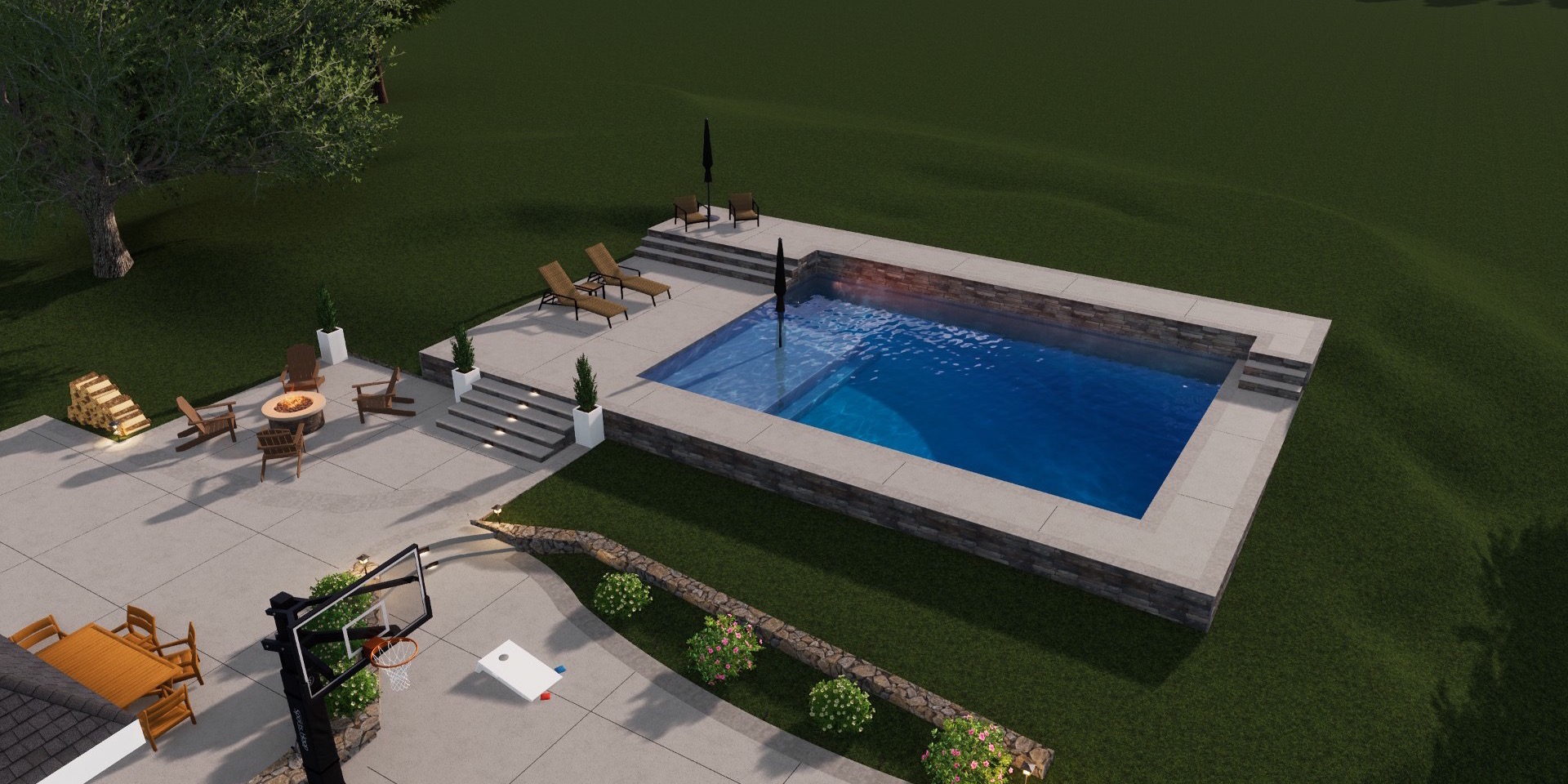
If you live in one of the many Treasure Valley neighborhoods with a homeowners association, there is one step that comes before almost everything else on your pool project: getting your HOA to sign off. It is not the most exciting part of building a backyard you will love, but handled early, it is usually painless. Handled late, it can cost you weeks and a redesign. Here is how it works in Boise, Meridian, Eagle, Star, and across the valley, and exactly what to put in front of your architectural committee.
If your home is in an HOA, the answer is almost always yes. Most HOAs are governed by a recorded declaration of covenants, conditions, and restrictions (CC&Rs), and nearly all of them require architectural approval before you make a permanent exterior change to your lot. An inground pool, new fencing, a spa, an outdoor kitchen, and new hardscape all usually fall under that rule.
The exact requirements live in your own CC&Rs and your HOA’s design guidelines, so read those first. Look for a section titled something like “Architectural Control,” “Architectural Review Committee,” or “Design Review.” It will tell you what needs approval, who reviews it, and how long the committee has to respond.
This trips up a lot of homeowners. Your HOA approval and your building permit are separate approvals from separate groups, and one never replaces the other.
Your city or county building department (the City of Boise, Meridian, Eagle, Star, Nampa, or Ada or Canyon County, depending on where your parcel sits) reviews your pool for building code, engineering, safety barriers, electrical, and inspections. Your HOA reviews it against your neighborhood’s private rules, which are often about appearance, placement, and neighbors. You need both before construction starts. See our step-by-step guide to the City of Boise 426 pool permit for what that process looks like on the city side.
In practice, we recommend getting HOA approval first, or at least in parallel with engineering. If the HOA asks you to move the pool, change the fence, or relocate equipment, it is much easier to adjust a design than to revise stamped engineering and a permit application.
Every association is different, but these are the items architectural committees most often care about on a pool:
A complete, professional package is the single best way to get a quick yes. Committees approve what they can clearly picture. A strong pool submittal usually includes:
We help our clients put together HOA design packages as part of our design process, so you are not left trying to translate a pool plan into HOA language on your own.
That depends entirely on your association. Many committees meet on a set schedule, and your CC&Rs or design guidelines usually say how long they have to respond. Check that timeline the day you decide to build, and work backward from it.
Because Treasure Valley pool construction is seasonal, timing matters. Fall and winter are the perfect months to get design, HOA approval, engineering, and permits done so your project is ready to go when the build season opens. You can read more about that in our guide to planning a pool build in Boise before the ground freezes.
A lot of pool shoppers working with a Meridian pool builder, or in Star, Eagle, Kuna, and Nampa live in newer subdivisions that are still being built out. In those neighborhoods, the developer often still controls the HOA. Idaho’s Homeowner’s Association Act says that for HOAs formed after July 1, 2025, the developer (called the declarant) keeps architectural review authority during the period of declarant control, unless the declaration says otherwise (Idaho Code 55-3204A).
What that means for you: your pool plans may be reviewed by the builder or developer’s design committee rather than a neighbor-run board. Their guidelines can be detailed, so ask your HOA manager or builder for the current design guidelines and application before you finalize your layout.
We do not recommend finding out. Depending on your CC&Rs, an HOA may be able to require changes or impose fines. Idaho law does put some guardrails on fines: under Idaho Code 55-3206, an HOA can only fine you if the CC&Rs clearly give it that authority, the board must vote, and you must get at least 30 days’ written notice before the meeting where that vote happens. Even so, nobody wants a dispute with their neighbors over a brand new pool. Getting approval first is faster, cheaper, and a lot less stressful.
It can deny a specific plan if it does not meet the CC&Rs or design guidelines, and some associations restrict pools or certain features outright. That is why reading your documents first matters so much. More often, a denial is really a “not like this,” such as a fence that is too tall, equipment that is too visible, or a material that does not match. A well-prepared resubmittal usually fixes it. If your CC&Rs seem to prohibit a pool entirely, talk with your HOA board and, if needed, a real estate attorney before you invest in design.
Our process is built so the paperwork never slows down your backyard:
You focus on picking the tile. We will handle the approvals.
Do I need HOA approval for an inground pool in Boise?
If your home is in an HOA, almost certainly yes. Most CC&Rs require architectural approval for permanent exterior changes like a pool, fence, or spa. Check your CC&Rs and design guidelines to confirm.
Does my HOA approval replace my city pool permit?
No. Your HOA and your city or county building department are separate approvals. You need both before construction begins.
Should I get HOA approval or the building permit first?
We recommend HOA approval first, or in parallel with engineering, so any changes your HOA requests can be made before engineering and permit plans are finalized.
What should I submit to my HOA for a pool?
Usually the HOA application form, a scaled site plan, a rendering, fence and gate details, material and color selections, equipment location and screening, a drainage note, and a construction access plan.
Who reviews pool plans in a new subdivision?
In many newer neighborhoods, the developer still controls the HOA. For Idaho HOAs formed after July 1, 2025, the developer keeps architectural review authority during declarant control unless the declaration says otherwise (Idaho Code 55-3204A).
Can my HOA fine me for building a pool without approval?
It may, if your CC&Rs clearly allow fines. Idaho Code 55-3206 requires a board vote and at least 30 days’ written notice before a fine is imposed.
The best time to start your HOA approval is before your design is final, and fall and winter are the perfect time to do it. Book a free design consultation with Maverick Pools and we will walk your lot, review your HOA’s requirements with you, and map out a plan to get you swimming next season.
Call (208) 279-1641 or book your free design consultation.
Every project starts with a free design consultation.