
May 7, 2026 — Maverick Pools
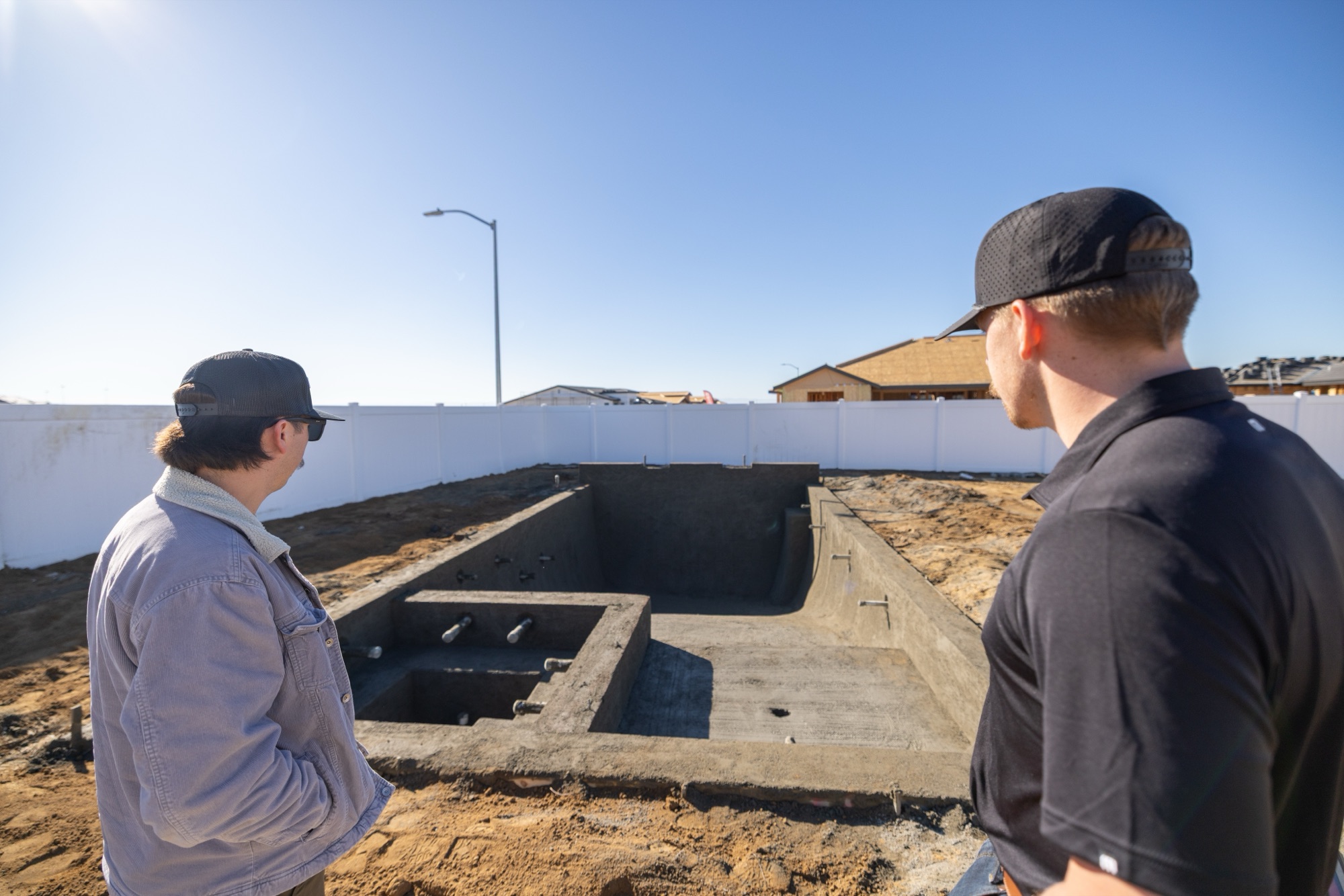
Permitting is the invisible phase of every pool project. Homeowners understand excavation, gunite, tile, and equipment — those are visible, tangible things. Permitting is paperwork, review queues, and waiting. It’s also the phase most likely to derail your timeline if you haven’t planned for it.
Here’s what’s actually required in Treasure Valley, and what realistic timelines look like.
Private residential pools in both Ada and Canyon counties require three categories of permit:
Building permit. Covers the structural pool shell — the gunite, rebar, and footprint. Requires engineer-stamped drawings showing pool dimensions, shell thickness, rebar spacing, and drainage.
Electrical permit. Covers all pool-related electrical: pump wiring, lighting, automation system, bonding, and GFCI protection. Submitted in conjunction with or shortly after the building permit.
Health department approval. Required for all private pools in Idaho. The review typically covers drainage, equipment placement, and water circulation system design.
All three need to be submitted, reviewed, and approved before construction can begin.
Within Treasure Valley, permit review timelines vary by city and by the building department’s current workload. Some jurisdictions move quickly; others take longer. A clean, complete submission — engineer-stamped drawings, all three permit types filed simultaneously, no missing documentation — is the single biggest factor in how fast your permits clear.
For planning purposes, we tell clients to budget for pre-construction (design, engineering, and permitting combined) to take roughly 2–3 weeks on a well-prepared project. Some jurisdictions move faster; some take longer depending on volume. We’ve seen permits clear in under two weeks and we’ve seen them take longer in busier departments.
The numbers shift with each city’s workload. What doesn’t shift is the importance of a complete initial submission.
The most common reasons permits get delayed or require resubmission:
Non-stamped drawings. Building departments require engineer-stamped structural drawings. Submitting without them means an immediate rejection and a restart.
Missing health department documentation. The health review is a separate process from the building permit. Some homeowners (and contractors) don’t submit both simultaneously, which adds weeks.
Site-specific complications. Setback variances, easements, HOA review requirements, or unusual lot configurations may require additional documentation or a separate approval process.
Revision cycles. If the reviewer has questions or requires changes to the submitted drawings, each revision round adds time. A complete initial submission avoids this entirely.
We’ve seen projects get delayed significantly because of incomplete initial submissions. This is avoidable with proper preparation.
We engage a licensed structural engineer on every project before submitting anything. The drawings go in complete, stamped, and formatted for the specific jurisdiction we’re submitting to.
We submit all three permit types simultaneously or in the optimal sequence for each jurisdiction. We track review status and respond to any revision requests immediately.
You don’t manage any of this. We do.
If you want to swim in June, your permit needs to be approved in March or April. That means submitting in January or February. That means your design consultation, engineering, and drawing preparation need to happen in the fall or early winter.
The calendar math is unforgiving. Plan backwards from when you want to swim — not forwards from when you feel ready to start.
Every project starts with a conversation. We respond within one business day.