
May 3, 2026 — Maverick Pools
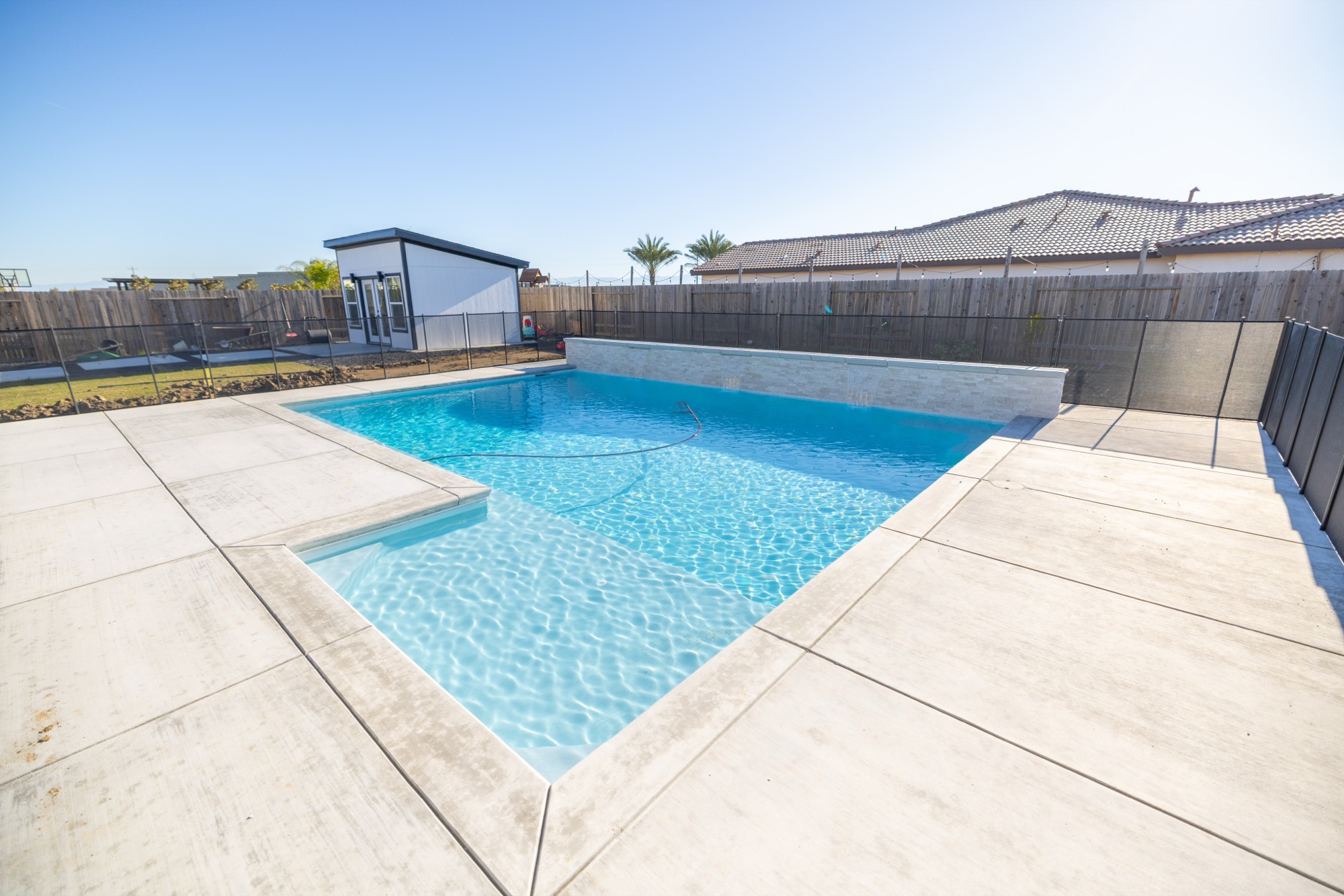
Owning a gunite pool in Treasure Valley is different from owning one in Southern California or Arizona. The climate introduces a maintenance cycle that California pool owners never deal with — primarily because Idaho winters actually freeze things.
Here’s what ongoing maintenance looks like for a gunite pool in Idaho, broken into seasonal phases.
During active use, gunite pool maintenance is straightforward and largely the same regardless of climate.
Chemical balancing. Water chemistry needs to be checked and adjusted weekly at minimum. The primary targets: pH (7.4–7.6), total alkalinity (80–120 ppm), and free chlorine (1–3 ppm). In Idaho’s summer heat, chlorine burns off faster during peak sun hours. If your pool sits in full afternoon sun, you may need to adjust more frequently.
Brushing. Gunite and plaster surfaces should be brushed weekly to prevent algae from establishing on the porous surface. This is the maintenance step most homeowners skip — and it’s the one that leads to staining and etching over time.
Filter cleaning. Hayward cartridge and DE filters need cleaning when pressure rises 8–10 PSI above the clean baseline. In a yard with heavy tree coverage or near agricultural areas, this can mean cleaning more frequently during certain seasons.
Equipment check. Variable-speed pumps, heaters, and the OmniLogic automation system run reliably, but a quick monthly check of flow rates, pressure readings, and error logs keeps you ahead of issues.
Closing is the most important maintenance event of the Idaho pool year. A pool that’s closed properly protects the plaster, equipment, and plumbing from freeze damage. A pool that’s closed improperly can result in cracked pipes, damaged equipment, or surface damage that’s expensive to repair.
Timing. We recommend closing before the first hard freeze — typically by mid-October in most of Treasure Valley. Waiting until temperatures are already dipping below freezing adds risk.
Chemical winterizing. Before closing, bring all chemistry into balance and add a winterizing chemical kit (algaecide, stain prevention, and an enzyme-based product to reduce organic buildup during the off-season).
Blowing the lines. Every plumbing line needs to be blown clear of water using a commercial air compressor. Any water left standing in exposed plumbing will freeze and expand — PVC pipes crack, fittings fail, and equipment housings can split. This step is not optional and should be done by someone who knows where every return and suction line terminates.
Plugging returns and skimmers. All returns and skimmer lines get winterizing plugs inserted after the lines are blown.
Equipment winterization. Pumps, filters, and heaters need to be drained and, in some cases, physically removed from outdoor equipment pads and stored if they’re not rated for extended freezing exposure.
Covering the pool. A solid safety cover or mesh cover keeps debris out over the winter. In Idaho, you’ll accumulate snow load on the cover — make sure whatever cover system you’re using is rated for the weight.
Opening follows the reverse of closing, with a few additions.
Wait for stable temperatures. Don’t rush to open in March. Algae growth accelerates when water warms above 50°F, but a pool that’s opened in freezing conditions just gets re-damaged. Wait until overnight lows are consistently above 40°F before starting the opening process.
Reassemble equipment, restart circulation. Reinstall any equipment you stored, remove winterizing plugs, and restart the system. Check for leaks at every fitting before leaving the system running unattended.
Shock and balance chemistry. Opening chemistry almost always requires a substantial shock treatment. After five or six months of sitting, even a well-covered pool will have chemistry drift. Get a complete water test, not just a strip test, before adjusting anything.
Brush and vacuum. Any debris that settled during winter needs to be removed before the water clears.
Gunite pool plaster has a surface lifespan of 10–15 years under normal conditions. Idaho’s climate — with its freeze-thaw cycles, relatively low humidity, and hard water in parts of Treasure Valley — can affect how quickly plaster shows its age.
Proper chemistry is the single biggest factor in plaster longevity. Low pH and low calcium hardness cause etching; high pH causes scaling. Both are avoidable with consistent maintenance.
When plaster does reach the end of its service life, the pool is drained, the old surface is removed, and new plaster or aggregate finish is applied — a straightforward process that leaves you with what is essentially a new pool surface while the structural gunite underneath remains fully intact.
That’s the long-term value of gunite: the structure itself lasts the life of the home. You’re maintaining the surface, not the shell.
Every project starts with a conversation. We respond within one business day.