
April 7, 2026 — Maverick Pools
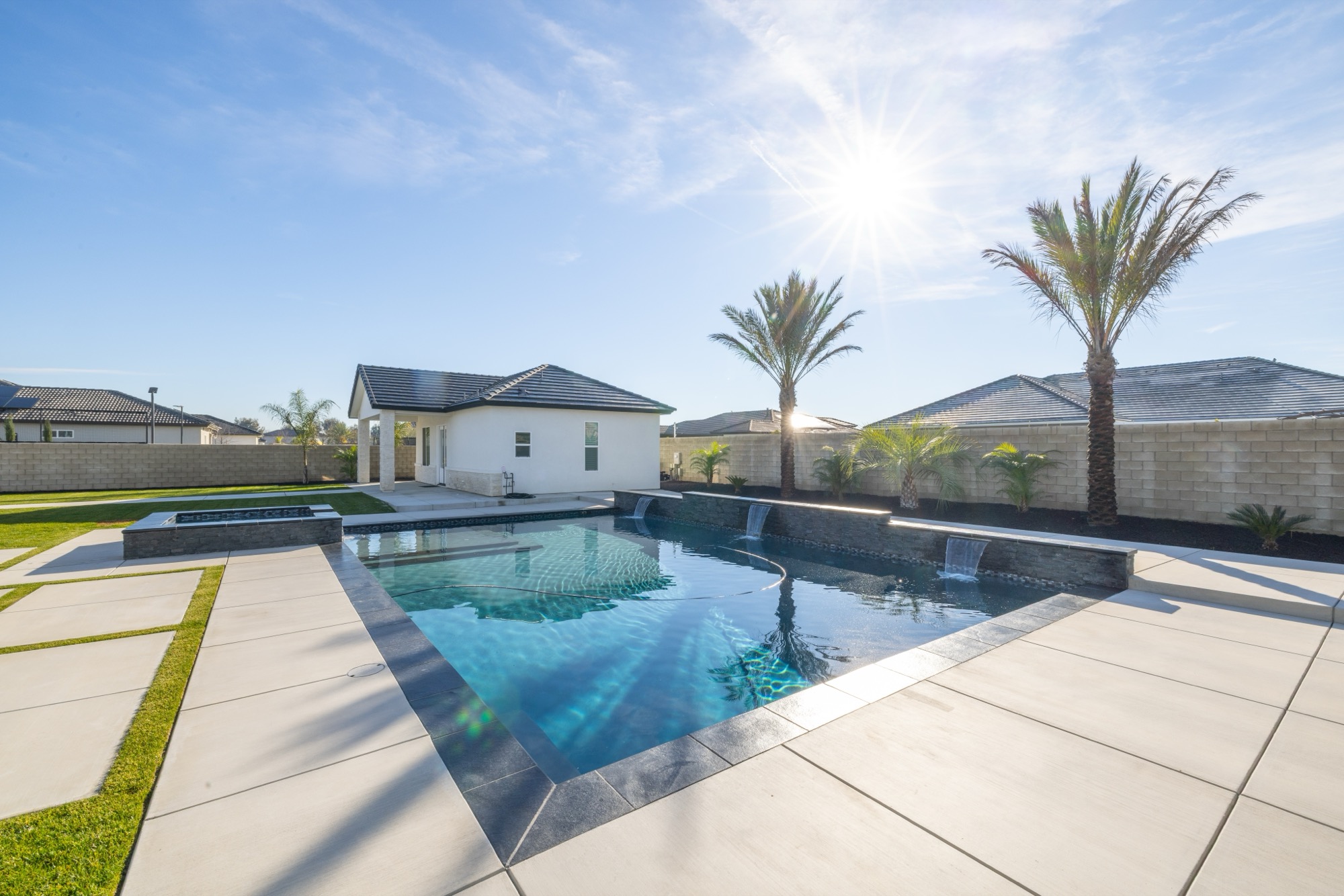
We build gunite pools. We don’t build fiberglass. That’s a transparent starting point for this comparison, and you should factor it in.
That said, we’ve been asked the gunite vs. fiberglass question hundreds of times, and we think homeowners deserve a real answer rather than a dismissal. Here’s our honest assessment.
A fiberglass pool starts as a shell manufactured in a factory — typically a layered composite of fiberglass and resin over a mold. The shell is produced in one piece and transported to the job site on a flatbed truck, then lowered into an excavated hole by crane.
The manufacturing process means fiberglass pools are limited to shapes, sizes, and depth configurations that can be molded and transported. There are more shapes available than there were 20 years ago, but you’re still selecting from a catalog rather than designing from scratch.
Gunite is pneumatically applied concrete — a dry mix shot through a hose at high pressure, mixed with water at the nozzle, and applied to a steel rebar cage that’s been formed to virtually any shape on site. The result is a fully custom, site-built structure with no size or shape limitations.
Because the pool is formed on site rather than in a factory, everything is variable: the shape, the depth, the wall angles, the bench and ledge positions, the spa placement and configuration. Nothing is dictated by a mold.
Speed. A fiberglass shell can be in the ground within days of permit approval. Total project timeline from contract to swim is typically faster than gunite.
Surface feel. Fiberglass is smooth and non-porous, which makes it resistant to algae growth and easier on bare feet than textured plaster or pebble finishes.
Lower initial maintenance. The non-porous surface requires less brushing than gunite plaster, and algae issues are less common in the early years of the pool’s life.
Upfront cost. A basic fiberglass pool is often less expensive than a comparable custom gunite build — though as you add features, the gap narrows.
These are real advantages for homeowners who prioritize faster installation, simpler early maintenance, or lower initial investment.
Design freedom. This is the central difference. A gunite pool can be any shape, any size, any depth configuration. A 40-foot lap pool, an irregular freeform design, a pool with a raised spa on one end and a sun shelf on the other, an infinity edge — all of these are gunite territory. Fiberglass can approximate some of these, but not all.
Long-term structural integrity. A properly engineered and constructed gunite shell has a structural lifespan of 50 years or more. Fiberglass shells are subject to gelcoat degradation, osmotic blistering (a manufacturing defect that causes bubbles in the shell), and structural issues when ground conditions shift around the shell. The fiberglass shell itself also flexes, which can cause problems with attached coping, tile, and fittings over time.
Climate performance. In climates with freeze-thaw cycles — like Treasure Valley, Idaho — fiberglass performs reasonably well because the shell flexes slightly rather than cracking. In extremely hot climates like Bakersfield, however, fiberglass shells can degrade faster under sustained UV exposure, and gel coat finishes are not as durable as premium pebble or aggregate gunite finishes.
Resale value. In our experience and the broader real estate market, custom gunite pools command more buyer interest than fiberglass — particularly in higher-value homes where the aesthetic and design quality of the pool is visible and evaluated.
Repair and modification. Gunite pools can be modified — benches added, steps reconfigured, spa features retrofitted — in ways that fiberglass simply cannot accommodate. If you’re building a permanent outdoor feature, the ability to modify it later matters.
Fiberglass pools are a reasonable choice for homeowners who:
They’re a less compelling choice for homeowners who:
We specialize in gunite because it’s the highest-quality, most flexible pool construction method available. Our entire team — design, engineering, subcontractors, and project management — is built around gunite construction.
Specialization matters. A company that builds both fiberglass and gunite pools is optimizing for volume across methods. We’re optimizing for one method done extremely well.
If fiberglass is the right fit for your situation, we’ll tell you so. But if you want a custom pool that matches your home and your vision, gunite is almost certainly the right answer.
Every project starts with a conversation. We respond within one business day.